Noorani Qaida or Iqra: Which Should Your Child Start With?
Both primers teach a child to read Arabic script. How they differ in structure and pace, which suits which learner, and why switching between them costs more than either choice.
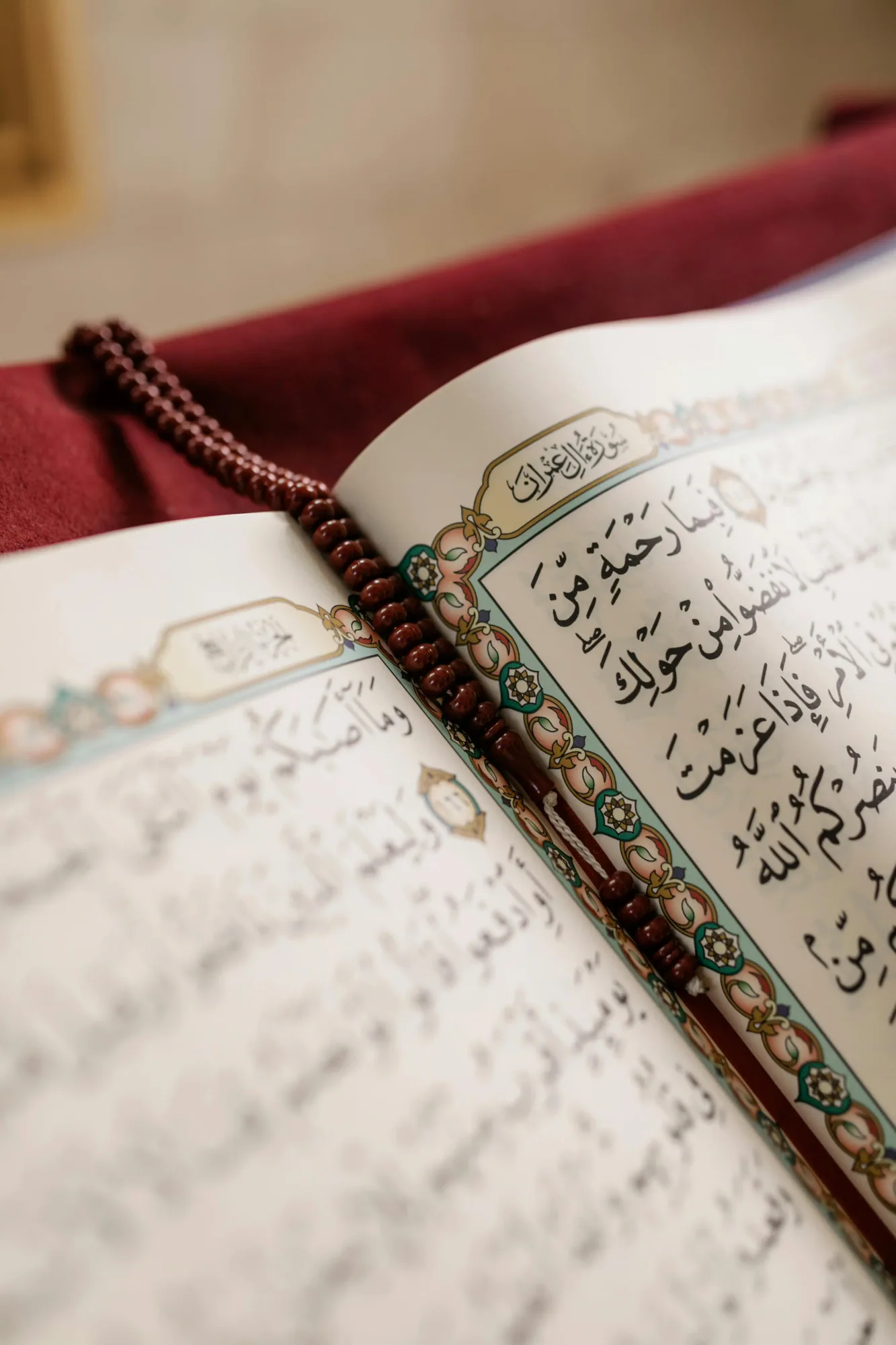
Both are primers that take a child from not knowing the Arabic alphabet to reading from the mushaf. Neither is a religious text in itself, and neither is more authentic than the other — they are teaching tools with different structures. The right one depends on the child and, more than parents expect, on the teacher.
What each one is
Noorani Qaida is a single book, traditionally used across the Arab world, South Asia and much of Africa. It moves in a deliberate sequence: individual letters, then letters with vowel marks, then joining, then the rules that govern recitation. Tajweed concepts appear early and are treated as part of reading rather than as a later subject.
Iqra is a six-volume graded series developed in Indonesia and widely used in Southeast Asia, and in many North American and Australian weekend schools. Each book is short, builds on the last, and introduces reading more phonetically — children begin forming simple combinations earlier.
How they differ in practice
| Noorani Qaida | Iqra | |
|---|---|---|
| Format | One volume | Six graded books |
| Early emphasis | Letter forms and accurate articulation | Reading combinations quickly |
| Tajweed | Integrated from early on | Introduced more gradually |
| Pace | Steadier, more drilling | Faster early wins |
| Sense of progress | One long book | A completion every few months |
| Typical duration | 6–12 months | 8–14 months across six books |
| Most common in | Arab world, South Asia, Africa, UK | Southeast Asia, USA, Australia |
The practical difference parents notice most is the sense of progress. Six thin books produce six completions; one thick book produces one. For a young child who needs visible milestones, that is not a trivial distinction — it is often the difference between continuing and losing interest.
The difference teachers notice most is front-loaded accuracy. Noorani Qaida spends longer on articulation before building speed, which tends to produce cleaner recitation later but can feel slow to a child who wants to read something.
Which suits which child
Choose Noorani Qaida if your child is six or older, settles into routine reasonably well, or is heading toward Hifz. The earlier Tajweed grounding pays off directly: memorizing with correct articulation from the start saves a great deal of unpicking later.
Choose Iqra if your child is four or five, gets discouraged easily, or has already tried and stalled on a Qaida. The shorter books and faster early reading give a child something to show for the effort before patience runs out.
Choose whichever your tutor uses well if you are torn. A teacher fluent in one method will get more out of your child than a teacher working through a method they do not usually use, and that effect is larger than the difference between the books.
The thing that actually matters: do not switch
Parents switch for understandable reasons — a new teacher prefers the other, a relative recommends it, progress feels slow. It is almost always a mistake.
The two systems introduce concepts in a different order. A child two-thirds through Noorani Qaida has met rules that Iqra Book 4 has not yet introduced, and has not met things Iqra covered in Book 2. Moving across does not continue the journey; it restarts it at a point that leaves gaps in both directions.
If progress feels slow, the cause is more often session length, frequency or engagement than the choice of primer. Those are worth examining first — see how long should a child's Quran lesson be.
What comes after either one
Both end at the same place: your child can decode Arabic script and is ready to read from the mushaf. Next is Nazra — reading the Quran itself with fluency — followed by formal Tajweed, and Hifz if your child wants it.
A child who finishes either primer properly, with accurate sounds rather than memorized pages, is in a strong position. One who rushes through either and arrives at the mushaf guessing at letters will be unpicking it for years.
We run both as full courses: Noorani Qaida and the Iqra book series.
Still torn? The two-minute level quiz asks four questions and tells you which stage your child is actually at — including when the answer is "not formal lessons yet". Classes: Quran classes for kids.
Next in this cluster: What age should a child start learning the Quran? · Teaching the Quran to children who don't speak Arabic