How Long Does It Take to Memorize the Quran?
A realistic timeline based on how much you memorize each day — and why revision, not memorization, is what actually decides how long it takes.
Almost every student asks this in their first lesson, and most of the answers online are either discouraging or dishonest. The truthful answer is that it depends almost entirely on one number: how much new material you commit to memory each day, sustained over years.
The arithmetic
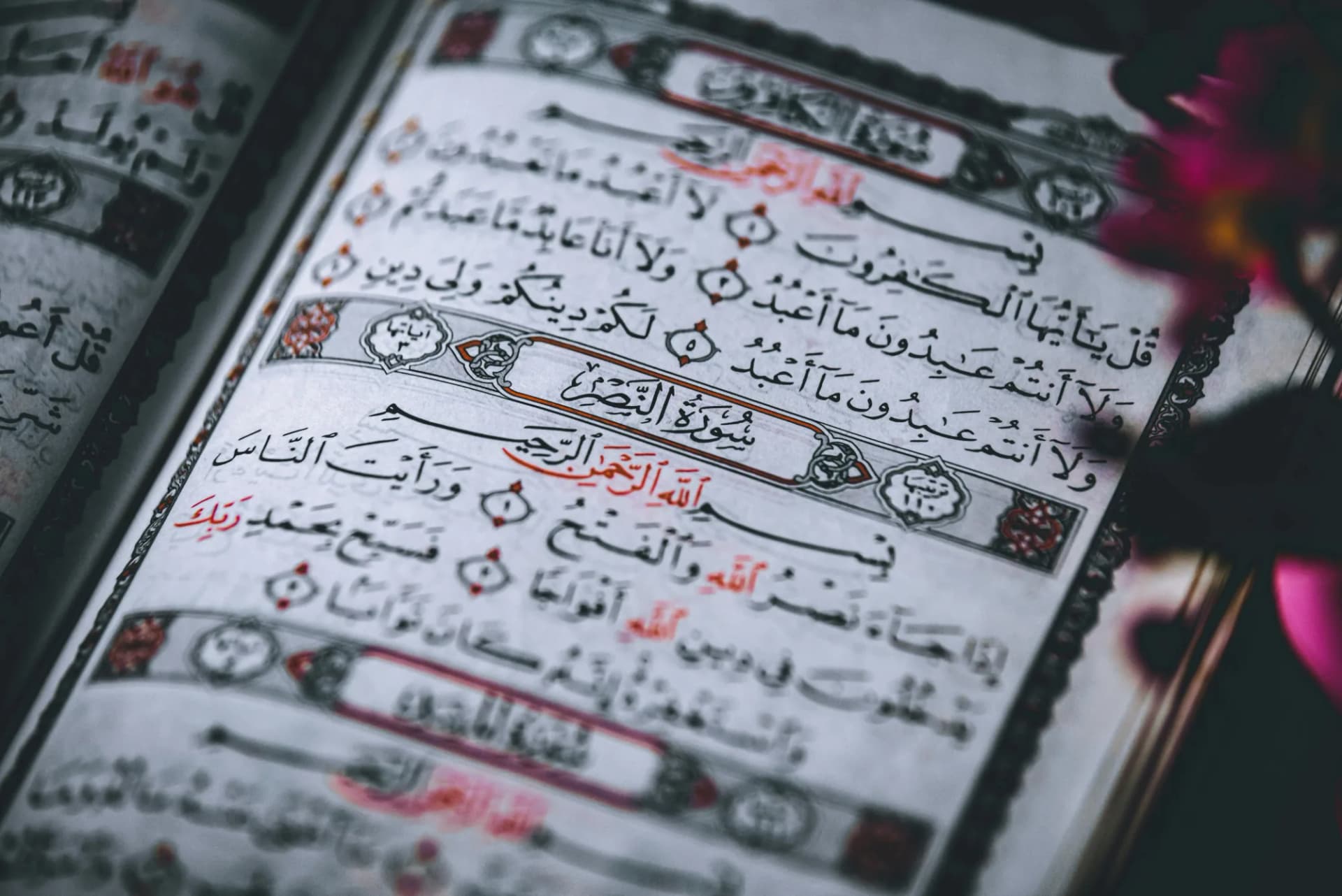
The Madani mushaf most students use runs to 604 pages at 15 lines a page — roughly 9,060 lines in total. That makes the raw calculation simple:
| New memorization per day | Memorization alone | Realistic, with revision |
|---|---|---|
| 2 pages | About 10 months | 1.5 – 2 years |
| 1 page | About 1 year 8 months | 2.5 – 3 years |
| Half a page | About 3 years 4 months | 4 – 5 years |
| 5 lines | About 5 years | 6 – 7 years |
| 2 lines | About 12 years | 15 years or more |
These five rows assume seven days a week. For your own number of days, and for what the plan costs you per day as the revision load grows, use our Hifz timeline calculator — it runs the same arithmetic as this table.
The gap between the two columns is where most people's expectations break. You do not get to memorize every single day for years without interruption. There is illness, travel, exam season, Ramadan, and the simple reality that some passages take three days to settle rather than one. A plan that assumes 365 productive days a year will fail by February.
Why revision is the real workload
New memorization is the part students focus on, but it is not what consumes the time. The problem is that memorized material decays, and the amount you have to keep alive grows every single day.
In your first month, you might have ten pages to revise. By the end of year one you have roughly 300, and every one of them needs to be revisited regularly or it slips. This is why students who sprint through the first few juz often stall completely around the halfway mark — they built a volume of memorized text larger than their revision habit could carry.
A working split looks roughly like this:
- New memorization (sabaq) — the passage you are learning today.
- Recent revision (sabaqi) — everything from the last seven days, recited daily.
- Old revision (manzil) — everything older, cycled on a fixed rota.
In the first few months, new memorization takes most of your time. By the second year, the ratio has inverted: revision takes two-thirds of the session and new material takes the rest. Students who plan only for the first situation are the ones who quit.
The four things that actually change your timeline
1. Your reading fluency before you start
This is the single largest factor and the most commonly skipped. A student who can read the Arabic script fluently and correctly memorizes far faster than one still decoding letters, because they are committing a remembered sound to memory rather than solving a puzzle each time.
If your reading is still hesitant, time spent on Noorani Qaida or Nazra first is not a delay. It routinely saves more time than it costs.
2. Whether your Tajweed is correct from the start
Memorizing with incorrect pronunciation means memorizing twice. The mistake becomes part of the muscle memory of the passage, and unlearning it later is substantially harder than learning it correctly the first time. Correcting Tajweed on 300 already-memorized pages is a genuinely miserable task, and it is entirely avoidable.
3. Daily consistency
Twenty minutes every day beats three hours once a week — not slightly, but by a wide margin. Memory consolidates through repeated exposure spaced over time. A single long session produces recall that feels solid on the day and is largely gone within a fortnight.
4. Age, but less than people assume
Children between roughly seven and fifteen do memorize faster, and their retention is excellent. But adults have advantages that partly offset this: better concentration, stronger comprehension of the Arabic, and self-discipline a child does not yet have. Adults who understand what they are reciting often retain better than children who do not.
وَلَقَدْ يَسَّرْنَا ٱلْقُرْءَانَ لِلذِّكْرِ فَهَلْ مِن مُّدَّكِرٍ
And We have certainly made the Quran easy for remembrance, so is there any who will remember?
A realistic weekly structure
For a student aiming at half a page a day alongside work or school:
- Five days of new memorization. Half a page each, taken in two or three sittings rather than one.
- Daily recent revision. The last seven days' worth, recited aloud from memory before starting anything new.
- One day for old revision only. No new material at all — just cycling through the older portion.
- One lighter day. Recitation and listening, nothing to memorize. This is what makes the other six sustainable.
That rhythm produces roughly 2.5 pages of new memorization a week, or about 130 pages a year, with revision that genuinely holds. Finishing in four to five years on that schedule is a realistic, repeatable outcome — and far better than an ambitious plan abandoned in month five.
Common mistakes that add years
- Starting before reading is fluent. Covered above, and the most expensive error of all.
- Memorizing silently. Hifz is an oral discipline. Recite aloud and have it heard.
- No fixed revision rota. "I'll revise when I get time" reliably means never.
- Skipping the hard passages. The ones you avoid are the ones that break your recall later, usually in the middle of a long recitation.
- Reciting only to yourself. Errors you cannot hear become permanent. A teacher listening is the mechanism that keeps the text accurate.
So what is the honest answer?
If you read Arabic fluently, memorize half a page daily, and revise properly, four to five years is a sound expectation. At a page a day with the time to support it, two and a half to three years. Full-time students in a dedicated programme regularly finish in under two.
The number that matters is not the one in the plan. It is the pace you are still keeping in month eighteen, when the novelty is long gone and revision takes most of the session. Choose that pace honestly at the start and the timeline takes care of itself.
Next: How to revise Hifz so you do not forget it — the revision systems that keep memorized pages accessible for life.
Memorizing as an adult: Hifz classes for adults — how the pace, the revision rota and the timeline work when you have a job.