How to Choose a Mushaf for Hifz
Why page layout matters more than you would expect for memorization, the difference between Uthmani and IndoPak scripts, and why you must never switch mid-Hifz.
This looks like the least important decision in Hifz and is quietly one of the most consequential. Not because one mushaf is more blessed than another — the text is identical — but because memorization attaches itself to the page far more than most students realise.
Page memory is real
Ask a hafiz where a particular ayah is and many will tell you not just the surah but the position: top third of a left-hand page, three lines down. That is not a party trick. It is how a large part of the memory is actually indexed.
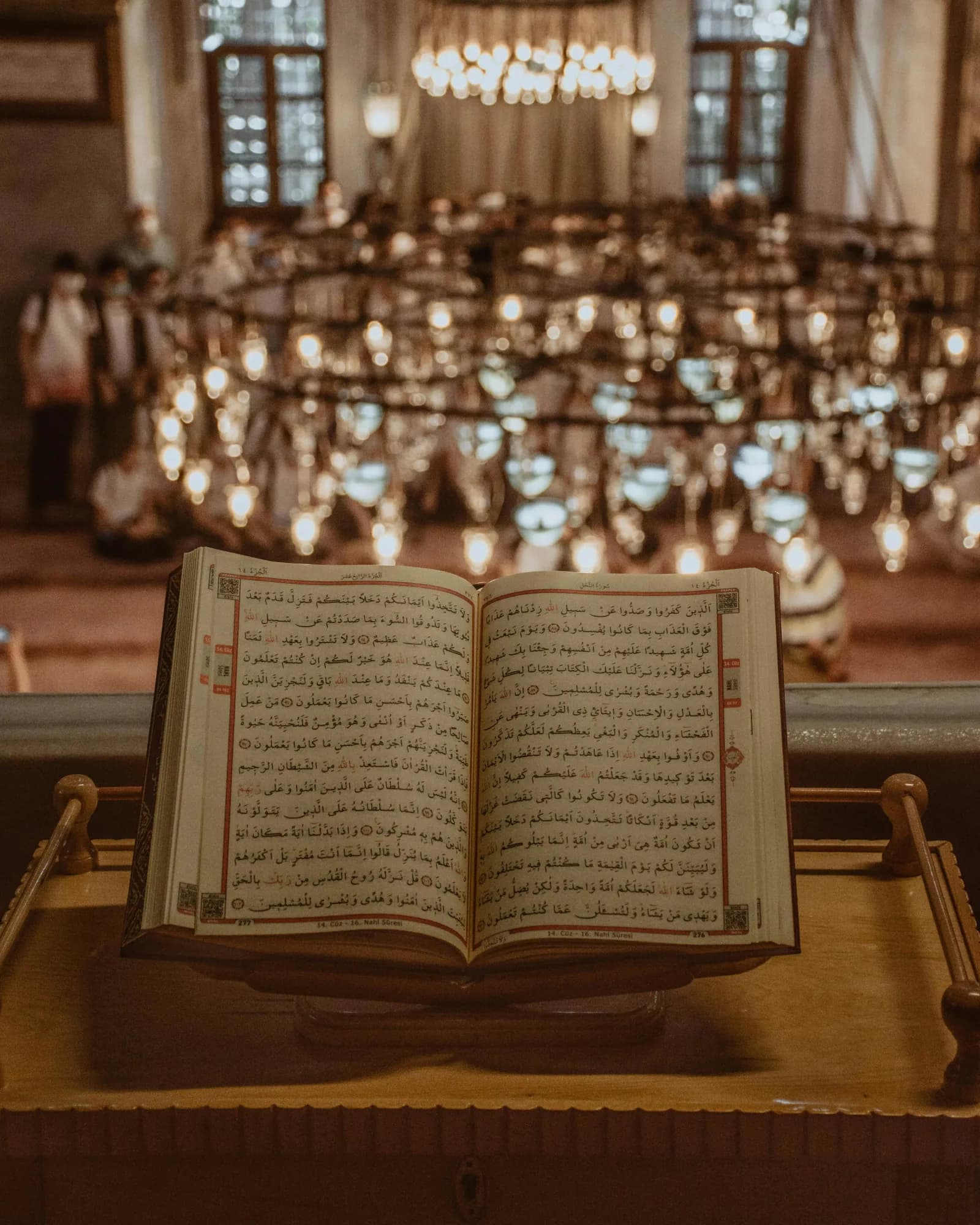
When you memorize from a fixed layout, your mind stores spatial information alongside the sound — line breaks, where a page turns, which ayah sits at the top. Those cues are doing real work during recall, and they are entirely specific to the edition you used.
This single fact drives almost every recommendation below.
Rule one: do not switch
If you take nothing else from this article: choose a mushaf before you begin and stay with it for the entire Hifz.
Students who switch — because they travelled and bought a local copy, or upgraded to a nicer edition, or moved to a phone app — consistently report that previously solid portions became shaky. The sound is unchanged, but every spatial cue has moved. You are asking recall to work without half the index it was built on.
If you must replace a worn-out copy, replace it with the same edition, same line count, same page layout. Buy a second identical copy now if you expect to travel; it is cheaper than the disruption.
The 15-line Madani mushaf
The default recommendation, worldwide, is the 15-line Madani mushaf — the layout published by the King Fahd Complex in Madinah.
- 604 pages, 15 lines each. Consistent and predictable.
- Every juz starts on a new page. Thirty juz across 604 pages, each occupying almost exactly 20 pages. This makes revision rotas arithmetic rather than guesswork — "one juz a day" is always about twenty pages.
- Every page ends at the end of an ayah. You are never left mid-ayah at a page turn, which matters more than it sounds when page boundaries are acting as recall cues.
- It is the global common standard. Any teacher anywhere can say "second line of page 312" and you are both looking at the same thing.
That last point is worth weighing if you are learning online with a tutor who may be in a different country from you.
Uthmani and IndoPak script
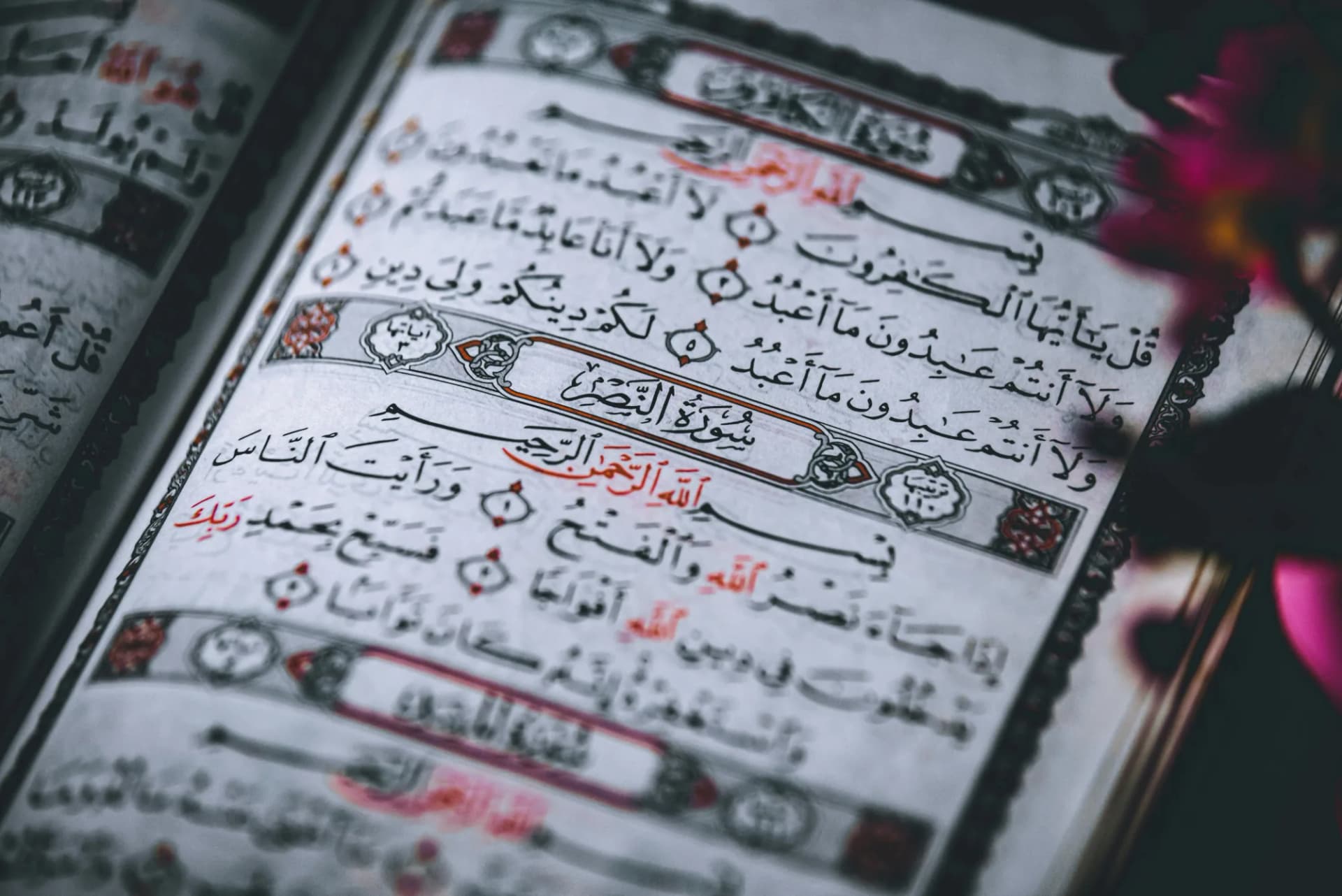
These are the two script conventions you will encounter. They represent the same text — the difference is in orthography and diacritical notation, not in content.
| Uthmani (Madani) | IndoPak | |
|---|---|---|
| Common in | Arab world, Africa, Turkey, most of the world | Pakistan, India, Bangladesh, and those diasporas |
| Line count | Usually 15 | Commonly 13 or 16 |
| Notation | Follows classical Uthmani orthography | Adapted conventions, familiar to Urdu readers |
| Stop signs | Standard waqf symbols | Similar, with some regional differences |
Neither is more correct. The practical considerations are:
- Use what your teacher uses. Mismatched copies make every lesson slower.
- If you learned to read from IndoPak script, switching to Uthmani for Hifz will cost you time — the letterforms and diacritics will read as subtly unfamiliar for months. Weigh that against the advantages of the 15-line standard.
- If you are starting from scratch, Uthmani 15-line is the safer default simply because it is the global standard.
The physical copy
Over the years of daily use, these matter more than they seem in a shop:
Size. A5 or larger. A pocket mushaf saves space and costs you clarity, which costs you accuracy. Many huffaz use a larger copy at home and a matching-layout smaller one for travel.
Print quality. Crisp black text on cream or off-white paper. Avoid stark white, which is tiring under long sessions, and avoid faint or thin printing — misreading a diacritic and memorizing the mistake is expensive.
Binding. Hifz means opening the same copy daily for years. A sewn binding survives; a cheap glued spine will not, and replacing it means the switching problem above.
Margins. Generous margins give you room for pencil marks — stop points, trouble spots, dates of revision. This is genuinely useful and a cramped layout denies it to you.
Colour-coded Tajweed editions. Helpful while you are still consolidating rules; some teachers find them visually noisy for memorization. If your Tajweed is reasonably solid, a plain copy is usually cleaner.
A short checklist
Before you start memorizing, make sure you can answer yes to all of these:
- Is this the script my teacher uses?
- Is it 15-line Madani layout, or a layout I have deliberately chosen and will keep?
- Is it large enough and well printed enough to read comfortably for an hour?
- Will the binding survive several years of daily use?
- Can I buy an identical second copy if this one is damaged or lost?
If any answer is no, resolve it now. Changing in month two is mildly annoying. Changing in year three is genuinely costly.
Before you buy: work out how many years of daily use you are actually buying for, with the Hifz timeline calculator. Memorizing around a job: Hifz classes for adults.
Next in this cluster: How to revise Hifz so you never forget it · Should you memorize from the start or the end?